Showing posts with label Teen Pregnancy. Show all posts

Monday, August 18, 2014

Six Months and Counting...

So, next Tuesday marks my six month milestone with the SC Campaign. And those months have flown by. It’s been a busy time at the SC Campaign. Our 20th Anniversary Gala, followed quickly by Summer Institute, sprinkled in with Contraceptive Counseling, ICE, Seventeen Days, Reproductive Coercion, Leadership, Be Protective, Social Media and youth, training trips to San Antonio and Knoxville…WOW!! Busy is an understatement. And the fall looks even busier! I’m still learning about CEUs, nursing CEUs, MAPPS hours and all of the different processes we go through to get these approved. I’m so very thankful to all of our partners for their patience as I learn and adjust. And I’m especially thankful for Markessce Craft and Sara Lamberson for helping with all of the logistics.

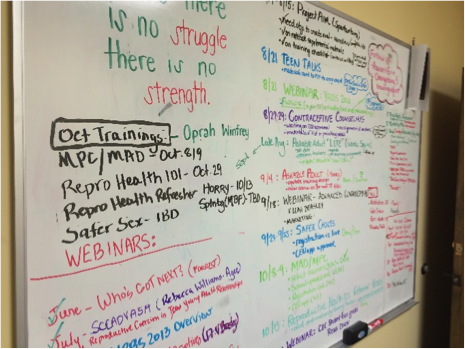
We are excited about several new trainings we are offering this fall:

Along with some great standards:
  • Making a Difference/Making Proud Choices
  • Safer Choices
  • Reproductive Health 101 
Check out our events page on our website for more information about all of our workshops, and keep checking as we are adding more to our calendar daily.

by Shannon Lindsay, Training Coordinator, SC Campaign to Prevent Teen Pregnancy

Monday, August 4, 2014

Talking to your teen about substance use and sex: prevention is key

When is the right time to talk to your teen about sex, drugs and alcohol use? The truth is talking about these matters is just as important as talking about drunk driving or preparing for college. While it may not be comfortable at first, the sooner you start talking about these things the better.

Photo credit: Fotolia.com
In the technology-driven world we live in, teens especially, are being exposed to sex and substance use both on the Internet and through friends. This results in teenagers becoming more curious about experimenting with substance or sex at a younger age. Teens may view drinking, smoking and sexual activity as the “cool thing to do” simply from the way it is glamorized in social media and talked about by their peers. Young teens also learn habits from their older siblings simply by viewing photos or status updates on Facebook or Instagram. While we can't completely shield our children from everything, there are ways to educate them on these topics so that they remain safe.

There is also a strong correlation between substance use and teen sexual activity. A study completed by CasaColumbia.org found that, “teens under age 15, who had ever had a drink were twice as likely to have had sex as those who didn’t drink.” The same can be said for teens, who drank ages 15 and up who were “7 times likelier to have had sexual intercourse and twice as likely to have had it with 4 or more partners than non-drinking teens.” [1] What many teens don’t realize is that these numbers don’t include only consensual sex in that age group. Drinking or using drugs might increase the risks for sexual abuse and even rape.

While you may believe that you have a good rope on what your teen is doing at all times, eventually they will be off to college and will need to make decisions regarding sex and substance use on their own. However, alcohol has lead to rising number of unprotected sex. In fact, according to data compiled in 2013 on CollegePrevention.org, “400,000 students between the ages of 18 and 24 had unprotected sex and more than 100,000 students between the ages of 18 and 24 report having been too intoxicated to know if they consented to having sex.”Unprotected sex can lead to a slew of problems such as unwanted pregnancy and sexual transmitted diseases. According to the same study, “97,000 students between the ages of 18 and 24 are victims of alcohol-related sexual assault or date rape.”[2]

So what can you do as a parent or trusted adult? Again, communication is key. Here are a few solid tips when approaching the subject with your teen.


  • Remain calm and collected. A screaming match between you and your teen will get you nowhere fast. When discussing these topics it’s best to remain calm and non-hysterical. This way your teen will engage in the conversation longer, and will not feel like they will get in trouble if they speak with you about their curiosity about sex or drug and alcohol use. The more you converse with your teen, the more comfortable you both will feel. As much as you may want to completely shut off the topic, it is best to inform your teen about situations they could get into when engaging in substance use such as overdoses, date rape drugs, sexual assault, unprotected sex or unwanted sexual advances. This way, if a dangerous situation does arise one day, they can be prepared to react accordingly.


  • Keep on top of social media. Depending on your personal preference you may not want your teen on social media sites. But if you are constantly being begged to permit it and you decide to give in, have some boundaries. Explain to your teen that anything put on the Internet can never be erased. Oftentimes teens don’t think about the long term and solely focus on the short term. While social media sites do have privacy measures, advise your teen against posting pictures of underage drinking or drug use. Another way to protect your teen is to add them as your friend. If you see anything unusual, ask your teen about it and how they feel casually. This might give you a better insight as to whether they are curious about experimenting with substance or not. 


How have you talked to your teen about these issues?

This blogpost is by guest blogger, Saint Jude Retreats, an alternative to traditional substance use treatment. Saint Jude Retreats provides a program for people with substance use problems that concentrates on self-directed positive and permanent change. Through the program, we offer the opportunity for individuals to self-evaluate and explore avenues for life enhancement.

Resources:
[1] http://www.casacolumbia.org/addiction-research/reports/dangerous-liaisons-substance-abuse-and-sex
[2] http://www.collegedrinkingprevention.gov/statssummaries/snapshot.aspx

Monday, July 28, 2014

It Takes a Village


It takes a whole village to raise a child, but...

it begins with a connection.  This week marked the release of the Annie E. Casey Foundation sponsored 2014 Kids Count Data Book, highlighting state-by-state progress, or lack thereof, around issues affecting children like education, health, poverty and safety. Thanks to our friends and colleagues at the Children's Trust of South Carolina, the agency responsible for South Carolina's data release, we are able to consider the well-being of children on a state and county level. South Carolina ranks 45th in the country for overall child well-being, which reflects very little progress in a positive direction. More than a quarter of a million children live in poverty, which contributes to the state's overall stagnation around health, education and the economy. The foundation is weak and even when we consider "bright spots" like teen birth rates (which have fallen by 47% over the past two decades), we realize just how fragile progress remains. 

The fragility of progress, and our often short attention spans, places unique responsibility on all of us - from youth-serving professionals and advocates to parents, faith leaders and government officials. I truly believe that most people care about children and their families, especially those who are in poverty, sick or marginalized in some other capacity. So, if most people care, then why do we continue to see such negative social and economic outcomes? Well, of course the answer is complicated, but I strongly believe the answer at least begins with our ability to genuinely engage and connect with each other.

Staff members from the South Carolina Campaign to Prevent Teen Pregnancy were able to join the Children's Trust of South Carolina during a couple of media activities this past week and, as I am sure happens every year, the media wanted to know "now what?"  We continue to have these data releases -notably, in the near future, the SC Campaign will work with state partners to produce data specific to teen births and the connection to other social issues. But, how will we use this data to inform effective strategies, to collaborate (like the Children's Trust of SC and the SC Campaign) and to CONNECT with the community at large?  How will we remind each other that we are ALL connected and impacted when a child grows up in poverty, when a child is consistently behind academically, when a young person becomes a parent, or when a family goes without healthcare? We should also consider the connections and overlaps between these issues so that strategies for improvement are comprehensive and reflect all of the factors that contribute to poverty, educational attainment, and health, etc.

Of course we cannot provide all of the answers with one data release or via a blog. But we can engage each other through community forums, volunteer efforts, mentoring and individual support for causes that effectively reach the homeless, the working poor, young parents, and so many others who often just need a stronger foundation from which to progress. 

Let's be that village we so often reference in our speeches and conference themes. Let's also remember this great African proverb is only a cliché if we fail to make the connections necessary to genuinely affect change.
++++
*It takes a whole village to raise a child - Igbo and Yoruba (Nigeria) Proverb

Monday, July 7, 2014

Freedom isn’t free. And neither is birth control.

The fireworks stands are popping up on every corner reminding us of the holiday that celebrates freedom and independence. However, a recent Supreme Court decision was quick to remind us that individual freedom- freedom to decide how to plan for child-bearing and freedom to decide what is best for our bodies is often not free. On June 30, the Supreme Court ruled in a 5-4 decision that closely held corporations, such as Hobby Lobby, cannot be required to provide contraceptive coverage to its employees if they object based on religious reasons. Our CEO, Forrest Alton, released this statement about the decision, “…when that decision-making autonomy is taken away and barriers are introduced, whether those be cost or otherwise, it makes it less likely women will choose to use the most effective methods of contraception consistently.” So while many women work in positions that will allow them access to long-acting reversible contraception (i.e. the IUD-intrauterine device) at a free or reduced cost, women who work at Hobby Lobby will not have the freedom to do the same. Of course, they can pay for it out-of-pocket but given the long-acting nature of these methods, the cost is often upwards of $500.


I find myself in a position that some may think is contradictory: I think the Supreme Court’s decision was wrong, and I am also a Christian. So where does that leave me? Does that mean that I am a lesser Christian than the executives at Hobby Lobby? I like to think that I am a Jesus-loving, women's rights supporting, Hillary in 2016 believing, firearm toting, equal rights supporting Christian. And no, I don't think that phrase is an oxymoron.

First of all, contraception is not just used by “promiscuous teens” (as you will hear some people say) but it is used by an overwhelming majority of women – young and old. The reasons for use vary, some women use contraception for the benefits to their skin and complexion, while others use it for regulating menstrual cycles, while the majority of women use it for preventing pregnancies or family planning. The long-acting reversible contraception methods (i.e., IUD, the shot, the implant), are used by many women in monogamous, exclusive relationships or marriages so they can plan for children or allow adequate space between pregnancies to help decrease the chances of complications during and after pregnancy.

While I am always in support of anyone standing up for what they think is right (even though I may not agree), it seems that if Hobby Lobby wants to use religious opposition to some forms of birth control, doesn’t that mean that they should also refuse to cover medications for diabetes and high blood pressure caused by obesity since gluttony is also a sin? Or refuse to cover psychological services that result from a sin like adultery or pornography addiction? Or perhaps refuse to cover medication that is only needed because of a sin - like medication needed because of experience with drug abuse and addiction?

Again, don’t get me wrong I am in full support of someone taking a stance for their religious freedom but shouldn’t it be an all or nothing stance? It isn’t fair to Christians as a whole when someone picks and choose the parts of the Bible that they want to enforce and then make a public stance based on religious beliefs. This type of “cherry-picking” Bible verses when it is convenient or comfortable supports the general consensus that all Christians are hypocritical and are only known for what they are against, and not what they are for (FYI –I believe my main man Jesus was for love, tolerance & forgiveness).

So as the holiday weekend approaches and we become consumed with fireworks, cookouts and dysfunctional family gatherings, consider this: the decision made by the Supreme Court directly impacted the freedom of a group of women who are employed with Hobby Lobby but even more so this decision was made loud and clear to all women who now feel more vulnerable to having their individual liberties stripped away by their employer. As anyone with a child knows, or anyone that has ever been around children, the ability to easily access and afford effective birth control options impacts everyone, not just us lucky ones born with a uterus.

Check out this TIME Magazine article to learn more about IUDs. 

by Sarah Kershner, It's Your Game Project Coordinator, SC Campaign to Prevent Teen Pregnancy

Monday, March 17, 2014

Introducing NotRightNowSC.org!

Our new website is almost here and we're getting pretty darn excited! Here are the top five things we're looking forward to about launching the new notrightnowsc.org in April.
1. It's mobile friendly!
Anyone who knows a teen will agree they're constantly connected, and the research backs it up. According to the PEW Research Center, 74 percent of teens access the Internet on a mobile device. Not only that, 25 percent of teens access the Internet primarily on a mobile device. Which means if we aren't mobile, one in four teens might never see our site at all!

2. We'll have information for pregnant and parenting teens.
For the first time, we've expanded our audience to include pregnant and parenting teens. Sure, we want to keep our young people from getting pregnant. But if they do, we want to help prevent a second pregnancy, encourage the parents to stay in school, and give them resources to keep their baby healthy and safe. 

3. We're including teen voices. 
We're giving teens a place to contribute their writing, art, and other creative ideas. Because who knows better what it's like to be a teen than a teen?

4. Teens will be able to use our site to find resources across the state. 
We've had some great success with the "Not Right Now, Put Pregnancy on Pause" campaign in Spartanburg and Horry counties. Thanks to all their hard work, we're able to take this brand state-wide and provide some really great resources for our young people. 

5. We're encouraging parents to learn and start the conversation. 
Parents should be their child's primary health educator. That's why we're pulling parents into this easy-to-use, jargon-free website that will help give them the tools to talk to their children about love, sex, and relationships and hopefully guide their child to informed, responsible decisions. 

by Kylee Perez, Communications Specialist, SC Campaign to Prevent Teen Pregnancy

Monday, January 20, 2014

A Note of Thanks

If I had told you 20 years ago that we were going to reduce the teen birth rate in South Carolina by 50% over the next two decades, I probably would have been laughed at, but that is, in fact, exactly what has happened. From 1992-2012, the teen birth rate (for 15-19 year olds) has declined by 47%! This is a remarkable accomplishment and one that would not have been possible without each and every one of you. So, I would like to pause and say THANK YOU!

THANK YOU to the young people who are making more responsible decisions. At the end of the day, this really is your victory.

THANK YOU to the parents who are starting conversations at home with their children about love, sex, and relationships. As a parent myself, I know this subject matter isn't easy, but we play such a critical role in our children’s decision making. Keep up the good work!

THANK YOU to faith leaders who are willing to tackle this subject matter within your congregations.You are giving young people a safe place to talk about issues they are facing.

THANK YOU to after-school program leaders and youth serving professionals who have made it your mission to make a difference in the lives of young people.

THANK YOU to clinicians who have worked tirelessly to ensure your facilities are teen friendly and that sexually active young people are leaving your clinic with the most effective forms of birth control.

THANK YOU to sex education teachers who know the importance of giving information on both abstinence and condoms and contraception in order to give young people the tools they need to stay healthy.

THANK YOU to those who financially support teen pregnancy prevention. Your gifts make it all possible.

And finally, THANK YOU to all of my colleagues at the South Carolina Campaign to Prevent Teen Pregnancy. I know we cannot take all of the credit for this substantial decline, but I do know that the work you all are doing on a daily basis is making a huge impact in the state.

So, today we celebrate – but tomorrow let’s get back to work. Time to focus on the future and how we can reduce the teen birth rate by another 50% over the next 20 years!

by Cayci Banks, Director of Communications, SC Campaign to Prevent Teen Pregnancy

Monday, January 13, 2014

Ringing in a New Year at the SC Campaign

January is the time of year when many of us decide to quit a bad habit or adopt a new hobby.  Some of us simply love having any reason to celebrate, while others treat the calendar roll-over just like any another day.

Here at the SC Campaign, after spending a relaxing couple of weeks with friends and family, we’re excited to begin our agency’s 20th anniversary year.  We’re looking back on 20 years of progress and celebrating a 47% decline in our state’s teen birth rate since our inception.  Plus, we’re hosting big party to be held on May 7, 2014 at the Columbia Museum of Art, and everyone’s invited!

Throughout 2014, we will be celebrating in many exciting ways, so stay tuned via our newsletter for updates on how you can join the fun.  We look forward to seeing you in 2014!

How did you ring in the new year?

by Kemi Ogunji, Executive/Development Assistant, SC Campaign to Prevent Teen Pregnancy

Monday, January 6, 2014

SC Campaign's Year of Successes!

The SC Campaign made some great strides in 2012-2013, click below to view our interactive Annual Report!

Monday, December 23, 2013

Recipes from Our Family to Yours

So, your teen is home for the holidays and expects you to be his or her social planner. You hear constant complaints of "Mom, I'm bored!" or "Dad, there's nothing to do around here!" I am all too familiar with this type of whining, because I was a master complainer growing up. What are some activities you can suggest to your teen to help with those boredom blues that may be a little more exciting than doing chores, reading a book (always my grandmother's suggestion) or staring at the wall and hoping that something fun just happens on its own? My suggestion: spend time in the kitchen! Cooking or baking with your teen is a great way to bond and start conversations about love, sex, and relationships. It may go a little like this...

Mom/Dad: Hey Suzie, can you measure two cups of flour and slowly add it to the mixer?

Suzie: Sure! Do I add the vanilla before or after?

Mom/Dad: After. By the way, your friend Johnnie seems nice and you two seem to really get along.

Suzie: Well....yeah, I really like him. I hope he asks me to be his girlfriend soon.

Mom/Dad: How exciting! But before you two get too serious, there are some things we should talk about...

**END SCENE**

Spending time with your teen while doing a low-stress activity like cooking or baking can create a comfortable, positive environment for sometimes-awkward or difficult conversations. These conversations should be open, often, and ongoing to ensure that your teen is comfortable coming to you about sensitive topics like love, sex, and relationships. For more ideas on how to start the conversation with your teen, click here. 

As a gift to you and your family, the SC Campaign has compiled some of our favorite holiday recipes. We hope you and your family will enjoy making and eating these treats!


CANDY FRUIT - from Beth DeHart
(This recipe is for strawberries. You can substitute the strawberry Jello with orange, lemon, blueberry, or any other fruit flavor you like, and shape the candies into the shape of that fruit.)

Ingredients:
1 cup, very fine coconut
3 pkg. (3 oz. each) strawberry Jello
3/4 cup sweetened condensed milk
1 sm. pkg. almond slivers, for stems; you can also use green icing
1 cup ground pecans
1/2 tsp. vanilla

Directions:
1.  Mix all of the above ingredients thoroughly (EXCEPT for one of the Jello packages.)
2.  Chill for 1 hour.
3.  Shape into strawberries (or whatever fruit flavor you choose.)
4.  Roll each strawberry in the remaining Jello. This gives the ‘fruit’ a more matte look, and helps keep them from being super sticky on your fingers.
5.  Insert a green tinted sliver of almond for stem. To make the green almond, add a few drops of green food coloring to the almonds in a jar and shake. Note: you can also just use green icing for the leaves.

These can be made ahead and frozen. They freeze exceptionally well and are very decorative for dessert trays. If you make several different ‘fruits,’ they can make a beautiful candy fruit tray!


MELOMAKARONA (Greek Christmas Walnut Honey Cookies) - from Eleni Gavrilis

Ingredients:
For the cookies:
1 cup olive oil
1 cup vegetable oil
3/4 cup sugar
Zest of one orange
3/4 cup orange juice
1/4 cup brandy
2 tsp. baking powder
1 tsp. baking soda
Pinch of salt
7 1/2 cups all-purpose flour
3/4 cup walnuts, ground coarsely
Ground cinnamon for sprinkling

Syrup:
1 cup honey
1 cup sugar
1 1/2 cups water
1 cinnamon stick
3-4 whole cloves
1-2-inch piece lemon rind
1 tsp. lemon juice

Directions:
1.  Preheat the oven to 350 degrees.
2.  In a small bowl, using your fingers, combine the orange zest with the sugar – rubbing the grains as if you were playing with sand to release the orange oils into the sugar.
3.  Using an electric mixer, beat the oil with the orange sugar until well mixed. In a separate bowl, sift the flour with the baking powder, baking soda and salt.
4.  Add the orange juice and brandy to mixer and mix well.
5.  Slowly incorporate the flour cup by cup until the mixture forms a dough that is not too loose but not quite firm either. It will be dense and wet but not sticky. Once the flour is incorporated fully stop mixing.
6.  To roll cookies, pinch a portion of dough off about the size of a walnut. Shape in your palms into a smooth oblong shape, almost like a small egg. Place on an ungreased cookie sheet. Shape and roll cookies until the sheet is filled.
7.  Press the tines of a large fork in a crosshatch pattern in the center of each cookie. This will flatten them slightly in the center. The cookies should resemble lightly flattened ovals when they go in the oven.
8.  Bake in a preheated 350-degree oven for 25 – 30 minutes until lightly browned. (The cookies will darken when submerged in syrup.)
9.  While the cookies are baking, prepare the syrup.
10. In a saucepan, combine the honey, sugar, water, cinnamon, cloves, and lemon rind. Bring the mixture to a boil then lower the heat and simmer uncovered for about 10 to 15 minutes. Remove the cinnamon, cloves, and lemon rind and stir in lemon juice.
11. Place the ground walnuts in a shallow plate or bowl next to the stove top. When the cookies come out of the oven and while they are still very warm, carefully float the cookies in the syrup and allow the cookies to absorb syrup on both sides.
12. Using a fork or small spatula, remove the cookie from the syrup and place on a platter or plate. Press ground walnuts lightly into the tops of the cookies (syrup will help it adhere) and sprinkle lightly with ground cinnamon.
13. Do not refrigerate as they will harden. Store in an airtight container at room temperature.


NO-BAKE BUTTERSCOTCH HAYSTACKS - from Sara Lamberson

Ingredients:
12 ounces butterscotch chips
3 tablespoons peanut butter
5 ounces chow mein noodles

Directions:
1.  Melt chips and peanut butter in microwave (about 2 minutes in mine, stir halfway through).
2.  Stir in chow mein noodles and drop onto wax paper (a heaping tablespoon per haystack).


SAUSAGE AND APPLE BITES - from Mary Prince
Yields 2 dozen muffins

Ingredients:
4 oz white country bread torn into 1/2 inch cubes
1/4 cup extra virgin olive oil
Kosher salt and ground pepper
2 tble unsalted butter
2/3 cup finely chopped onion
2/3 finely chopped celery
1/2 lb sweet Italian sausage, casings removed
6 garlic gloves, finely chopped
3/4 tsp dried sage
1 small granny smith apple, peeled and finely chopped
4 large eggs, beaten
2 tble chicken broth

Directions:
1.  Preheat oven to 350*.  Grease two 12 cup mini-muffin pans with cooking spray.
2.  On a baking sheet, toss the bread with 2 tble spoons of the oil; season with salt and pepper.  Bake for about 10 minutes, until toasted.  Transfer the croutons to a bowl.
3.  Meanwhile, in a large skillet, melt the butter in the remaining oil.  Add the onion and celery and cook over moderately high heat, stirring occasionally until golden, about 5 minutes.  Add the sausage, garlic, sage and cook, breaking up the sausage until no trace of pink remains, 5 minutes.  Mix the sausage, apple, eggs and broth into the croutons; season with salt and pepper.  Let stand for 5 minutes.
4.  Pack the stuffing into the muffin cups and bake for 20 - 25 minutes, until golden.  Transfer to a rack and let stand for 5 minutes.  Loosen the muffins with a sharp paring knife and lift them out.  Serve warm.


TORTILLA LASAGNA - from Jordan Slice

Ingredients:
6 8-inch fat-free flour tortillas
1 Tbs. olive oil
1 small onion, chopped (1 cup)
2 Tbs. chili powder
2 tsp. ancho chile powder
2 cloves garlic, minced (2 tsp.)
2 cups strained tomatoes, such as Pomì, divided
1 ½ cups cooked black beans, or 1 15-oz. can black beans, rinsed and drained
1 medium chayote, peeled and diced, or 2 medium zucchini, diced (1½ cups)
½ cup fresh or frozen corn kernels
1 ½ cups grated Monterey Jack or pepper Jack cheese

Directions:
1.  Preheat oven to 350°F. Toast tortillas on 2 baking sheets in oven 5 minutes, or until light brown, turning once.
2.  Heat oil in saucepan over medium heat. Add onion, and sauté 5 minutes, or until soft. Stir in chili powder, ancho chile powder, and garlic, and cook 30 seconds. Add 11/2 cups strained tomatoes, beans, chayote, corn, and 1/2 cup water, and season with salt and pepper, if desired. Cover, and cook 10 minutes, or until chayote is tender.
3.  Coat 2-inch-deep x 8-inch round baking dish with cooking spray. Spread 1/4 cup strained tomatoes in bottom of pan. Set 1 toasted tortilla in pan; top with 3/4 cup bean mixture and 1/4 cup cheese. Repeat layering 4 more times. Top with last tortilla, and spread remaining 1/4 cup strained tomatoes over top. Sprinkle with remaining 1/4 cup cheese. Bake 30 to 45 minutes, or until casserole is bubbly and cheese has melted. Let stand 10 minutes before cutting into 8 wedges.


by Sara Lamberson, Corporate Communications Specialist, SC Campaign to Prevent Teen Pregnancy

Monday, December 16, 2013

What Teen Pregnancy Prevention Means to Me…Now

Before I became the Health Communications Assistant at the SC Campaign, I lived in blissful ignorance of the teen pregnancy issue in South Carolina. I didn't know South Carolina was ranked 11th in the nation for teen pregnancy. I had no idea that only 38 percent of teen mothers graduate high school. My introduction to teen pregnancy came with cold, hard facts, and the harsh reality that we have a lot of work to do in SC. It’s not like I was never exposed to teen pregnancy; several girls in my high school class walked across the stage pregnant to accept their diplomas. In passing, my thoughts were, “Well, at least they’re graduating,” not realizing that those occurrences are anomalies throughout the state.  I didn't care too much about teen pregnancy because it didn’t affect me directly. Ranked 11th in the nation. 38 percent graduation rate. $197 million. Numbers always have a way of grabbing your attention.

Reaching teens in South Carolina requires someone who is able to have a real talk while giving straight answers. As a nation, we are well on our way in doing just that. The National Campaign to Prevent Teen and Unplanned Pregnancy reports that the national teen birth rate has dropped an astonishing 52 percent since peaking in the early 1990s. That’s a leap in the right direction, but we have more work to do. Teen pregnancy isn't something that the state of SC can afford to be complacent about or afford for that matter. In 2008, SC tax payers spent $197 million on costs associated with teen pregnancy.  From an economical stand point, that’s $197 million reasons to get our house in order.  Teen pregnancy isn’t an issue that I acknowledge with vague recognition now. I don’t care about engaging teens because it is my job, I care about it because we need to continue making headway with this issue. The numbers opened my eyes, and if 2013 is any indication, we are moving in the right direction.

by Shana Adams, Health Communications Assistant, SC Campaign to Prevent Teen Pregnancy

Tuesday, December 10, 2013

Learning about Love, Sex, and Relationships at Church

At the SC Campaign, we focus on different types of people who have an impact on teens.  Lately I have been working on a flyer for faith leaders with information on preventing teen pregnancy.  This is close to my heart because I got all of my information about sex and relationships from the people at my church.

My parents didn't really talk about sex; my dad mostly just said that if I got pregnant it would ruin his retirement.  As I got older, it started to be a common issue among my friends.  Since my parents weren't talking about it, I wasn't sure which way was up.

My youth group had an entire series on sex and Biblically based relationships.  We were all divided up into small groups and we each had a leader who went through everything with us.  I remember thinking it was awkward at the time, but looking back on it – I know it impacted me a great deal.  Our leaders shared personal stories with us that helped us see the importance of having healthy relationships.

The series lasted for a couple of weeks, and from what I can remember, we had different leaders talk to us about sex during a particular week.  I remember one lady, who had been a teen mom, was open and honest, telling us exactly how she got into the situation.  On the other hand, I also remember my great aunt telling us to think about her if we ever wanted to have unprotected sex.  This was obviously a joke, but I knew that if she took the time to talk to us about it she obviously knew what was best for us.

Having many different women talk to me about sex was important.  The lady who was a teen mom was relatable and although I only remember my great aunt making a joke- it still had a great impact on me.  The main thing was that these women took time to talk to me about sex, and had they not, I wouldn't have known the importance of a healthy relationship.

Tuesday, December 3, 2013

Black Friday in a New Light

As you all probably know, this past Friday was Black Friday. You know, the day after Thanksgiving where all the retail stores have crazy door-buster deals and people stand outside at midnight waiting to get them. It always amazes me how much people prepare and plan for this one special day.  Men and women across the country research the best deals and create a game plan, so that on Black Friday they can execute it and walk away with the best deals. As I think about the tradition of Black Friday and how families prepare for this one day of savings, it made me reflect on why people, including our young people today, do not think about family planning in the same light as they do Black Friday.

Just like Black Friday deals, our young people need to think about the best plan for their lives and decide when is the best time to begin a family.  According to the World Health Organization, family planning allows individuals to attain their desired number of children by selecting the timing and spacing of birth.  This is achieved through the use of contraceptive methods, and research shows that family planning significantly impacts the overall health and well-being of women.  With this in mind, I believe individuals should devote as much energy and effort into family planning as they do into finding the best deals for Black Friday.  While it is true that you may save a boat-load of money on Black Friday, family planning can save you even more money over your lifetime.  In South Carolina alone, teen pregnancy costs taxpayers about $200 million annually.  Imagine how much taxpayers can save if individuals think about family planning as much as they think about Black Friday deals. After all, are you really going to want that argyle sweater next year?  

Friday, November 22, 2013

Rethink Your Tailgate Checklist

I’m often struck by the hustle and bustle that comes along with a fall Friday in Columbia.  I’m well aware that games are played on Saturday, but going through the pre-game checklist of fandom begins on Friday (if not well before).

First to the grocery store… $100 + on food and libations for the tailgate… check!

Then we get our parking situation in order… $40… check!

Tickets.  What about tickets?  $100 for 2 on Stub Hub (if you’re lucky)… check!

So, let’s call it $250 before we get to the game.  That’s assuming that your unwashed-for-six-weeks, faded, lucky t-shirt doesn’t yet need to be replaced.  That’s also assuming you don’t spend any additional money at the game.

I get it, I really do.  I’m as hardcore a fan as anyone out there – and attending sporting events is what most, if not all, of the “extra” finances are dedicated to.  But, recently I’ve wondered, what if an equivalent financial contribution went to the organizations and charities that I care most about?  Would I be willing to donate an equal amount to that which I spend on entertainment (let’s be honest, that’s what it is) to a nonprofit in our state?

This week, I’m putting my money where my mouth is.  And I wonder if you will join me.

I’m not even saying the contribution has to go to the SC Campaign to Prevent Teen Pregnancy (although it would be awesome if that was your choice); rather my challenge to you is more global… pick a nonprofit you care about this week and make an investment in them!!
Then, hurry up and get those tickets for Clemson vs. Carolina… I hear they are going fast!

Want to invest in South Carolina youth? Click here!

Tuesday, November 19, 2013

The Reason I Love (and Hate) My Job

There’s a little good and bad in almost everything, and my job is no exception. As the Community Mobilization Coordinator for the SC Campaign to Prevent Teen Pregnancy, my job duties cover a wide range of activities from training and presentations to planning events. My favorite part of the job is advising the Youth Action Board – a team of about 13, ages 14-20, who is committed to decreasing teen birth rates in Spartanburg County. Separate from my job, I also work with youth in my church, primarily 10th and 11th grade young ladies. I love working with teens because they are passionate, energetic, creative, optimistic (usually ☺), excited, overwhelming, slightly selfish, definitely challenging whirlwinds of noise and movement. While there isn’t enough money in the world for me to go back and do my teen years over again, to spend time with young people at a stage in my life when I’m okay with being me and not overly eager to impress is pretty cool. I’m able to be genuine, and they respond well to that.

So while I love spending time being a part of the lives of young people, there are times when I also hate it. Sometimes I hate how they stretch me – pushing me to be better today than I was yesterday because they so desperately need to be around adults who walk their walk, talk their talk, and live with integrity. I hate how quickly their pain becomes my own – when they are abused or mistreated or broken-hearted. While I want so much just to promise them that things will get better, that this feeling will pass, that those bullies won’t matter to them in the years to come, I know that for them every minute of every day feels like a mountain to climb. They just need me to listen – not advise. I hate how I sometimes go home and cry because I see the pain in their eyes, their heads hung in unnecessary shame with hair hanging down to hide whatever mix of emotions they’re feeling, but I can’t fix things for them or make it all go away. I hate how needy they can be and how demanding at times because they know I am the adult they can trust – who will be there. I hate how easily they can be torn down and how much it means to them for me to deliver one word of praise. I hate how they can’t see how incredible they are – how much they have to offer the world from their heads and from their hearts. I hate how easily they allow someone else to make them feel worthless when they are clearly worthy of so much. I hate how life experiences beyond their control – often things adults have done to or around them – have caused them to live outside the margins where it’s easier to just shrink away than to fight to make things better.

Ironically, the things I hate most about my job are the things that make me good at my job.  In fact, they are things that make me a better human being. Just when I think I’ve emptied my proverbial cup working with young people, I find it to be overflowing because they’ve poured so much more into me. In the process of encouraging them, I have been encouraged. Because when I am most vulnerable, when I am giving 100% of myself, when I am fully invested in the lives of others – that is when I am truly able to make a difference. So even when it’s hard, I will continue to be there for our youth because they need me. They need you, too.

by Dana Becker, Community Mobilization Coordinator, SC Campaign to Prevent Teen Pregnancy

Saturday, November 16, 2013

Horry County Youth Pastor Discusses How to Talk to Youth About Teen Pregnancy

Reverend Wallace Evans Jr., Chesterfield Missionary Baptist Church Youth Pastor and Executive Director of A Father's Place, Horry County's father engagement initiative, appeared on WMBF News (Myrtle Beach, SC) on Thursday, Nov. 12 to speak about the importance of open, ongoing conversation between youth and their parents or trusted adults.

90% of South Carolina parents say they talk to their youth about love, sex, and relationships, but only 64% teens say they are having these conversations. So where is the disconnect?

"I think part of the issue is parents are waiting to have the one right talk, and it ends up happening too late." said Rev. Evans. "Parents are not having that ongoing dialogue...they are not building that foundation of good, solid communication." 

Click on the image below to view the interview.


For more information on how to talk to youth about love, sex, and relationships, visit our Parent Portal.

by Sara Lamberson, Corporate Communications Specialist, SC Campaign to Prevent Teen Pregnancy

Saturday, November 9, 2013

Through the Tween Years and Beyond

My stepson turns 10 this December, and I’m slightly worried.  In three years he’ll morph into a teenager! We don’t always feed him nutritious meals, get him to complete weekly chores or take a shower without prompting, so I wonder: have we given him the tools to make his way in the world and eventually survive on his own?
My stepson and me, September 2012

About a hundred years ago, he might be a well-seasoned factory worker or farmer by now!  Thanks to the Keating-Owens Act of 1916, he is not, but I can’t help but wonder if we’re preparing him enough.  His current loves include trading Pokémon cards, riding his scooter, and playing video games like Minecraft.  He draws and writes his own comics with his friends and is generally upbeat, but how long will he stay this way?

Some of my loneliest, most uncomfortable years took place during middle school.  I felt so out of place.  As it turns out, so did most kids.  That’s because the tweenage years are when you start to find yourself.  You start becoming aware of what it takes to fit in and how much you want to.

On my journey, I shaved the hair beneath my ponytail and dyed my hair with Kool-Aid and Sun-In.  I wore fake Doc Martens until I was called out by an 8th grader, then immediately begged my parents to buy me real ones (they did).  Later, I started wearing CoverGirl powder foundation and bought a dark, moody shade of burgundy lipstick, which I never wore.  But during these years, I also won an award for playing trumpet, discovered I was an excellent speech-writer, and took my first week-long overnight trip without my parents.

Although some of my tween style choices might have been questionable, my parents let me do as I pleased. They let me figure out who I was on my own.  So that’s my plan.  I will support my stepson’s tween interests and style choices, encourage him to take chances, and I will model some healthy living along the way.  After all, many of life’s memorable moments occur not when we’re living perfectly, but when we’re going with the flow and following our curiosity wherever it may take us.

by Kemi Ogunji, Executive/Development Assistant, SC Campaign to Prevent Teen Pregnancy

Tuesday, November 5, 2013

Takeaways from the Healthy Teen Network Conference

Last week I traveled to Savannah, Ga. for the 34th Annual Healthy Teen Network (HTN) Conference. Every time I attend a conference, I leave inspired, motivated and a little overwhelmed with all the ideas that have come forth. I leave with pages of notes and list of things I want to remember once I get back to work. Here are the top three takeaways from my HTN experience:

  • Read more about Peter Benson and the theories surrounding "Sparks," a metaphor for the talents and passions that motivate young people to grow and learn.
  • “Visual literacy is a 21st Century skill. We have to honor that.” -- Karen Gavigan.
  • “What if we don’t believe problems erase strength?” -- Kathy Putnam.
Next year, join Healthy Teen Network to celebrate 35 years at their annual conference in Austin, Texas!

by Meredith Talford, Upstate Training and TA Specialist, SC Campaign to Prevent Teen Pregnancy


Saturday, November 2, 2013

Sex Ed From a Father's Perspective

I am a father of two young kids. A few weeks ago, my wife called and was upset because she saw our five-year-old daughter crying during an intruder drill at the elementary school where she attends kindergarten and my wife teaches. My wife said that our daughter was crying and scared as she and her fellow classmates huddled together in the bathroom of her classroom while having to be completely silent. Prior to the drill (which is scheduled periodically), her teacher had to explain what the dangers were and how they could protect themselves, which included practicing for the intruder drills. As a father, the thought of my daughter being upset and frightened was not easy to deal with. I, and many other parents, would do anything humanly possible to avoid having our children feel this way. The beginning of the conversations between my wife and I started with how uncomfortable we were with not only our little girl being scared but us having to think about what is possible and the possible danger both of our kids could be in. After we talked for a while we both agreed that it was unfortunately necessary for our kids to know the dangers that are out there and that it is a good thing to practice protecting yourself against them. 

I have been working in teen pregnancy prevention for over 12 years now and have heard plenty of reasons why people do not support comprehensive sexuality education and also reasons some choose not to discuss sexuality at all. I think sometimes it is hard for others and myself to see how they could think in such a way and often quickly blow them off or label them with being close minded or “old fashioned” without stopping to think why they believe that. Now, the danger that I described above is obviously different and scarier to some than teen pregnancy but I still draw parallels when talking to others about both. I have been in this field a long time and deeply believe in comprehensive sexuality education. I believe that it’s a young person’s right to know what they are in danger of and how to protect themselves. I talk about this issue daily for work and freely and often as possible outside of work. Teaching, training, talking and discussing sexuality is easy and something I enjoy. Others have not talked about it daily, and in fact, many adults have not talked about it much, if ever. When I talk about sex or sexuality in some settings, I see adults growing visibly uncomfortable and even upset that I am speaking about the topic. I also have worked for and with school districts in many different settings and have had to deal with parents and community members who do not want their teens discussing sex at all, not to mention not teaching comprehensive sex ed. My question is why are they so against this topic that I am so passionate about teaching? Don’t they know the risks their kids are subjected to? Don’t they know how easy it is to educate them? Don’t they know that practicing a skill could help prevent STIs and unwanted pregnancies? Well, no…no they don’t.

I have found through working in this field, and more importantly to me, talking to my friends, family, and peers that I have known for many years, and in some cases, my whole life is that they all believe that teen pregnancy and STIs are a problem but mostly they are uncomfortable talking about issues because they never had anyone talk to them. Many believe that their young person is not at risk. I will always begin the conversation telling them that just because something makes us uncomfortable and we wish it wasn’t necessary to address, doesn’t mean it is not the right thing to do for others who need it and deserve it. Many of the people may have grown up in an area or situation where these topics were not an issue, but the reality is that it is an issue for their young people. I wish I didn’t have to talk to my kids about strangers and intruders in schools or fire and tornado drills for that matter, but I know that ignoring these dangers and failing to talk to them is not fair to them nor will it help protect them. I also wish that my daughter and her classmates didn’t have to practice these drills, but I know that practicing a skill is more effective than just talking about it. I have found that talking to others and educating them about the risk that young people are facing everywhere, not just in “those” neighborhoods, help them to understand why they or their communities, including schools, should be talking about comprehensive sexuality education. I also think it helps to show them that even if they are uncomfortable and wish it wasn’t an issue doesn’t meant that it should not be addressed today. Most people don’t have the comfort level that I have to talk about love, sex, and relationships but they have to understand that their young people need to talk about it, learn skills to protect themselves, and be given the space and time to practice the skills they have been taught.

Some may wish we lived in a time where STIs, teen pregnancies, and unhealthy relationships weren’t an issue, but the reality is that it is. And just because you wish it didn’t exist and are uncomfortable with talking about these things doesn’t mean that it shouldn’t be addressed. Choosing not to talk about it and give accurate and factual information will not protect anyone from anything. I know that just because the thought of possible dangerous situations that my children may face may not be easy for me to think about or even talk about at times, that it is still my responsibility to talk to them about it and help them know how they can protect themselves. 


by Chris Rollison, Technical Assistance Coordinator, SC Campaign to Prevent Teen Pregnancy

Tuesday, October 22, 2013

If I Were a Child Again

A few Sundays ago, the pastor of Brookland Baptist Church gave a sermon on love, pertaining to parents and children.  The scriptural reading came from 1 Corinthians 13:4-13: “When I was a child, I spoke as a child, I understood as a child, I thought as a child. When I became a man, I put away childish things.”  He gave the sermon from the insight as a child talking to adults. 

Pastor Jackson’s first point of emphasis was:  I hope my parents and adults would remember when I had something to say I would SPEAK it as a child.  This means children imitate what is heard from other adults.  I have grown to realize many people do not believe that children listen to what they are saying, because they almost never listen whenever they are given advice. Children often see and hear more than what we think they do.  For instance, a story was told during the sermon about a little boy in Sunday School who was called upon to pray.  He started off his prayer with Dear Mr. Damn.  After he finished praying, the teacher asked why he referred to God as “Mr. D.”  The child answered saying, “Well, isn’t that God’s second name?”  He was speaking what he had heard from other adults.  Those adults are his role models, and I’ve heard many adults say, “Do as I say, not as I do,” but that doesn’t guarantee that a child won’t imitate you.        
Pastor Jackson’s second point was:  I hope my parents and other adults would remember I UNDERSTAND as a child. I put thoughts into action based on my understanding from my role models.  Basically, what I see in my parents and others is how I will act because what they are doing is how I understand things to work.  If parents and other role models portray strong work ethic, then children will understand what it means to work.  If there is an emphasis on education around children, then they will understand how important education is.  On the other hand, if a child only sees one parent or adult working in their household and the other sits at home watching TV and eating all day, then they will understand that this is the way a household should be.  

Finally, Pastor Jackon’s last point was this:  I hope my parents would remember that my childish thoughts about love are how my parents display love toward each other.  Pastor Jackson pointed out three kinds of love:  IF love, BECAUSE love and ANYHOW love.  IF love is explained as conditional love that depends on behavior; the love is earned.  An example given was:  “if you make all As and Bs in school, I’ll be proud of you as my child.”  All children understand IF love because they are always bargained with IF love to gain certain results.  Children recognize IF love that is dependent upon works, not grace.  IF love can be great to mold children into how they should act, but it should not be the only love displayed.

Children view BECAUSE love as being more protective of the parent and not considerate of the child.  It is based upon appearance, because a parent holds a certain position, i.e. a president of a company, may expect certain things from their child and they have to conduct themselves in a certain manner.  This means not bringing shame upon the parents and upholding the family’s name.  This could be a great kind of love also because it brings children a sense of responsibility and duty into their lives.  However, many times BECAUSE love is what keeps families together, because the family does not want to break their image. They may stay together for the children no matter what, even if they are no longer in love. 

Thirdly, ANYHOW love is recognized and thought about by children for their parents.  Children need ANYHOW love because of the many challenges they may be facing in their lives.  Children will make mistakes, just like adults did and still do.  ANYHOW love is patient and kind, not jealous or arrogant, does not insist on its own way, not irritable or resentful, does not rejoice in wrong but rejoices in the right, and bares, believes, and hope of all things.  Children may disappoint their parents at times but parents should love them anyhow. 

I can only hope that I am being a great role model to the children that are looking up to me and displaying actions of love for them to imitate.  Once I become a parent, I also hope that I will be able to display actions that are worthy of my children’s hearing and seeing.  One way to ensure this is to open the lines of communication between children and parents and/or trusted adults.  Knowing the things your children are doing, and how they are doing those things, will always show what the child is being taught through other people’s actions at home.  This goes back to an earlier example of the child calling God Mr. D.  A parent would have known that their child calls God Mr. D if they are keeping an open line of communication and could help to correct that behavior.  It’s always said that “learning starts at home.”        

For resources and information on how to talk to your child, visit our Parent Portal.

 by Edwina Mack, USC Master of Social Work Field Place Student, SC Campaign to Prevent Teen Pregnancy